There has been a growth in studies that aim to quantify the mental and physical health benefits of creative activities. Engaging in creative behaviours has been attributed to improving depression and stress, assisting with cognitive decline to increased happiness.
These posts explore how participating in the arts through everyday ‘little c’ creative activities like dancing, drawing, painting, performing and more broadly craft making, are being understood as an essential part of a holistic healthcare system.
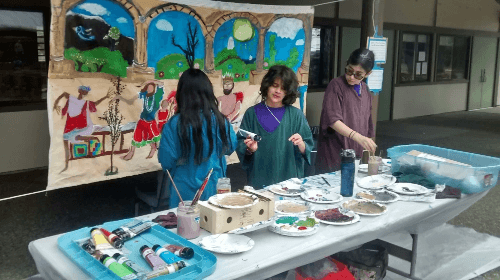
Making Connections - The Arts and Dementia
A few years back I became a volunteer for a program for people living with dementia in residential facilities. Called 'Connections' it used discussion based tours of artworks, as a means to connect participants in a shared activity through interpretation, memories and personal insights. This had, and continues, to show a direct benefit to participant's mental well-being. Through discussion and interpretation of works of art, participants are able to reconnect with their sense of identity and communicate to their optimum cognitive capacity.
Cortisol Lowers Significantly After 45 Minutes of Art Creation
This is yet another important study researching and validating the value of art, and the act of making, with significant health benefits. A Drexel University study found that making art can significantly reduce stress related hormones.
Your Doctor May Be Prescribing Art Classes in the Future
Imagine that the next time you visit your doctor, they prescribe a new creative endeavor, like a community painting group or a dance workshop, with the aim of improving your physical or mental health. This scenario is approaching reality in the U.K., where a recent study found that 66 percent of doctors believe the arts have a positive role to play in the prevention of illness.
Resources
Downloadable Free Course
Downloadable Free Resource
How the Arts Are Changing The Way We Understand Health and Wellbeing
Book Review
What can reduce your cortisol, extend your life span by 10 years and has the healing potential to provide accessible solutions for mental and physical health, helping with loneliness, trauma, dementia, and physical rehabilitation? Check out Your Brain on Art: How the Arts Transform Us, written by Susan Magsamen, a neuroscientist, and Ivy Ross, a Google hardware designer.
Presentation
The 'Keep Calm and Get Creative’ presentation explores how we can develop creativity, become better problem solvers and also how we might use this to our advantage throughout our lives.